Body & Bath / Care note
Unscented vs Fragrance-Free: Check the Formula
Compare real U.S. product claims and ingredient lists to understand unscented versus fragrance-free, including what phenoxyethanol and plant oils cannot prove.
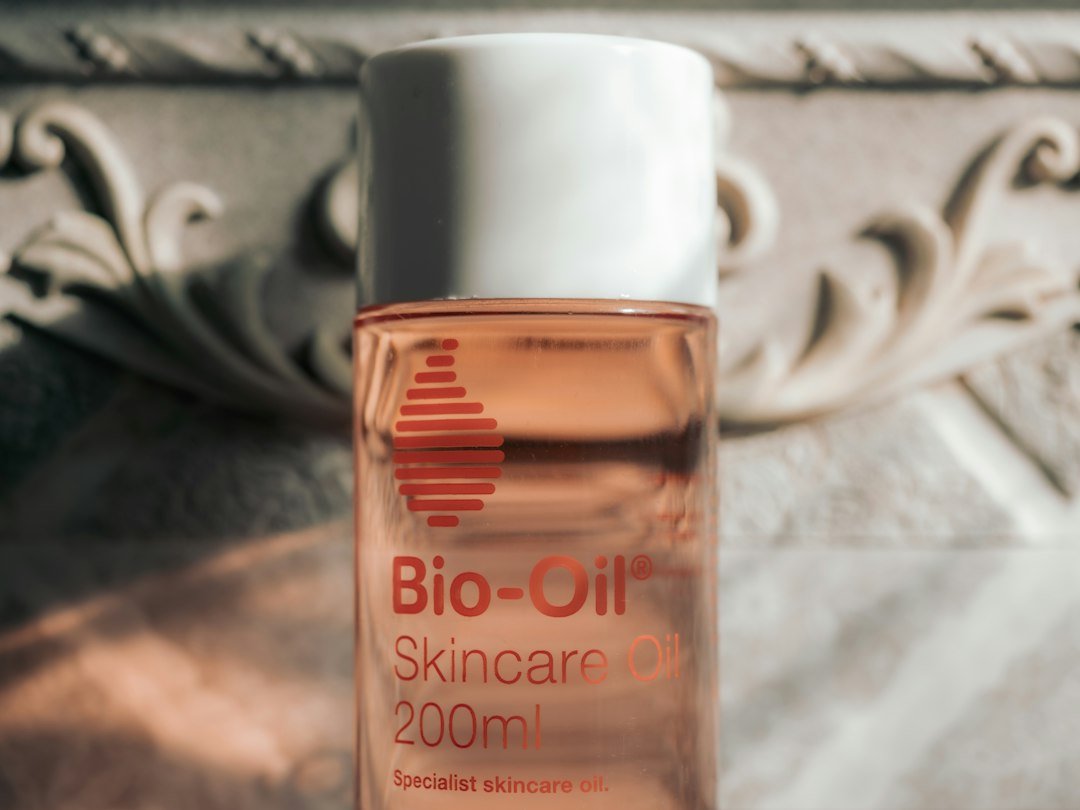
Cover is illustrative product-packaging photography. It is not one of the three manufacturer-page examples below, a product test, or a recommendation.
Unscented and fragrance-free are not interchangeable. Unscented usually describes the absence of a noticeable smell; some products achieve that with masking fragrance. A fragrance-free product can still smell of its other ingredients. The FDA explains these distinctions and says cosmetic labeling must be truthful and not misleading.
The useful purchase check combines the exact product name, current ingredient declaration and the manufacturer's explanation. Smelling a tester cannot establish whether fragrance ingredients were added.
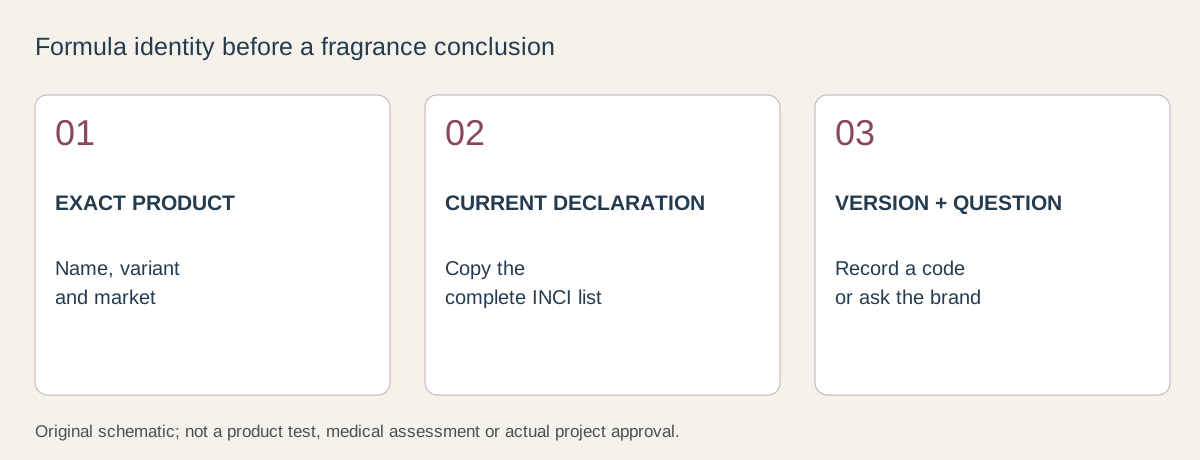
Three current product pages show why the wording needs context
These are U.S. manufacturer-page observations checked on October 16, 2026. We have not tested the products or inspected a purchased package. Examples demonstrate label reading, not rankings or recommendations. Online formulas can change; compare the bottle in your hand before buying.
| Exact product and official page | Claim on the page | Ingredient-declaration detail to compare | What the observation supports |
|---|---|---|---|
| Vanicream Moisturizing Cream | Its FAQ says it excludes fragrance and masking fragrance | The posted list includes water, petrolatum and sorbitol; its final entry is sorbic acid | The manufacturer's explicit statement answers more than whether the cream smells. Its explanation allows an ingredient smell despite the claim. |
| CeraVe Daily Moisturizing Lotion | The page states it is free of added fragrance | The posted INCI list includes PHENOXYETHANOL; formula identifier CODE F.I.L D215763/2 | Seeing this ingredient does not establish that masking fragrance was added. Match the formula identifier and full package list before drawing a conclusion. |
| Dr. Bronner's Baby Unscented Pure-Castile Liquid Soap | The U.S. page describes it as free from added fragrance | The list includes coconut, palm kernel, olive and hemp seed oils, plus jojoba wax | This named unscented product also has an explicit no-added-fragrance statement. Plant-derived ingredients alone do not contradict that statement or establish individual suitability. |
This comparison does not mean every unscented product contains masking fragrance. The FDA says some do. It also does not mean any of these products is guaranteed to suit a particular person's skin.
Read ingredient names without assigning unverified functions
Under the FDA's cosmetic fragrance guidance, fragrance mixtures can be declared collectively. An ingredient list therefore may not identify every component of a fragrance mixture.
Phenoxyethanol commonly serves as a preservative. The European Commission's SCCS opinion specifically evaluates that use. Its presence is not evidence of masking fragrance. A public ingredient declaration also does not establish its concentration or every function in a particular formulation. Ask the manufacturer when that distinction matters.
Likewise, distinguish a named plant oil, an essential oil and a fragrance mixture rather than treating every botanical name as equivalent. The name can provide a question to investigate; it cannot diagnose an allergy or certify safety. A shorter ingredient list is not a medical clearance.
Make a product-specific comparison record
Use the body-care guides to decide where a product would fit in your routine, then record its identity separately:
| Field | Fill in from the item you intend to use |
|---|---|
| Product | Full name, variant, size and market |
| Claim | Exact wording on the package |
| Ingredient declaration | Photograph or transcribe the complete list |
| Version | Formula code if supplied; batch identifier when contacting the brand |
| Web check | Official URL and date viewed |
| Unresolved question | One precise conflict or ingredient concern |
| Reply | Manufacturer response date and what it confirms |
Download a blank formula-version comparison CSV.
A difference between a store photograph and the current bottle can indicate a different version. Until the brand clarifies it, record the difference rather than guessing which source is correct.
Ask the manufacturer a question it can investigate
For the CeraVe example, a useful message would be: “I am checking Daily Moisturizing Lotion sold in the U.S. Your website lists formula D215763/2 and phenoxyethanol. My package lists [copy the actual details]. Do these describe the same current formula? Does this exact version contain any ingredients added for fragrance or odor masking?”
That is an example inquiry, not a manufacturer response we obtained. Save a real reply with the product identifier and date. It applies to the version discussed, not automatically to the brand's entire range.
Keep personal suitability separate
If you have a diagnosed allergy, follow your clinician's ingredient-avoidance advice. Do not deliberately test a known allergen because a package says fragrance-free. If a product causes a concerning reaction, stop using it and obtain appropriate medical advice.
The practical outcome is a precise record of the formula and the question still unanswered. Neither smell, a botanical name nor a front-label claim can resolve every individual concern.
Stay in this department
Three more notes for the same part of the routine.
Body
Build a Simple Body-Care Routine for Dry Seasons
Adjust shower heat, cleanser placement, drying, and moisturizer timing before filling the bath with specialty products.
Open the beauty note
Body
Choose Body Lotion by Finish, Clothes, and Weather
Compare absorption, slip, fragrance, packaging, climate, and whether the product is comfortable under real clothes.
Open the beauty note
Body
Make Hand and Foot Care Fit the End of the Day
Keep one comfortable product near the routine that already exposes dryness, washing, friction, or tired feet.
Open the beauty note